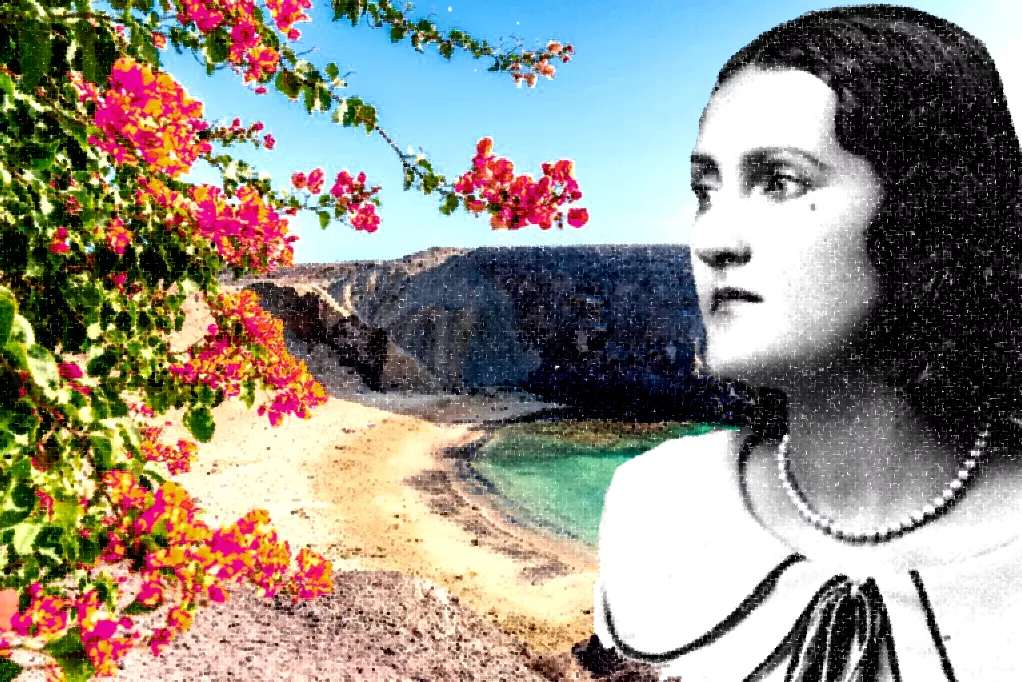
One of the most internationally renowned cultural figures born in Lobos Island She was neither a sailor nor a fisherwoman, although her story began precisely by the sea and by the light of a lighthouse.
Josefina Plá Guerra Galvany was born on November 9, 1903 in Isla de Lobos, FuerteventuraA writer, poet, playwright, journalist, essayist, ceramist and visual artist, she developed most of her career in Paraguay, a country in which she became one of the fundamental figures of 20th-century culture.
His life unfolded between two distant shores: the small volcanic island where he was born and Paraguay, where he built an extensive literary and artistic career. Between them always remained the sea, which also became a source of memory, absence, and reference within his creative universe.
Josefina Plá: life, work and legacy
Isla de Lobos, the beginning of a life between two continents
Josefina Plá was born in Lobos because her father, Leopoldo Plá Botella, worked as a lighthouse keeper. Her family had come to the Canary Islands precisely because of a profession that required them to move to different locations assigned to those in charge of maritime signals.
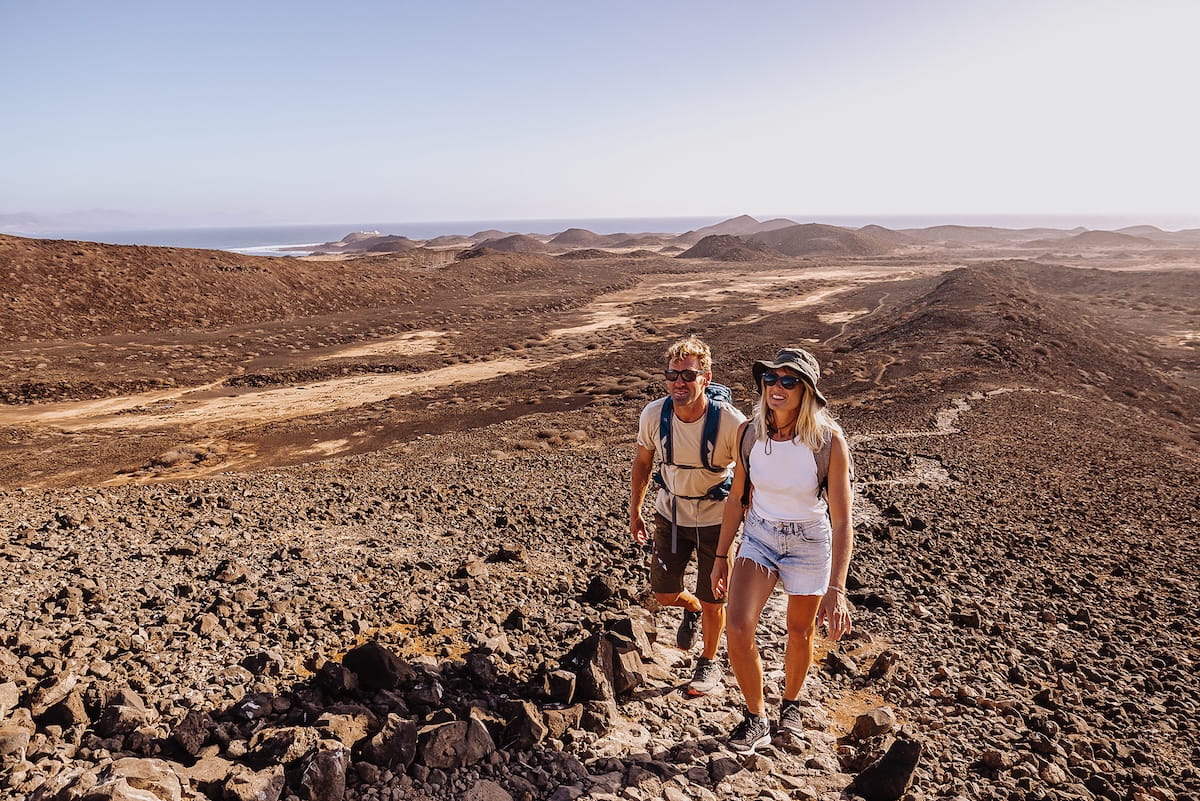
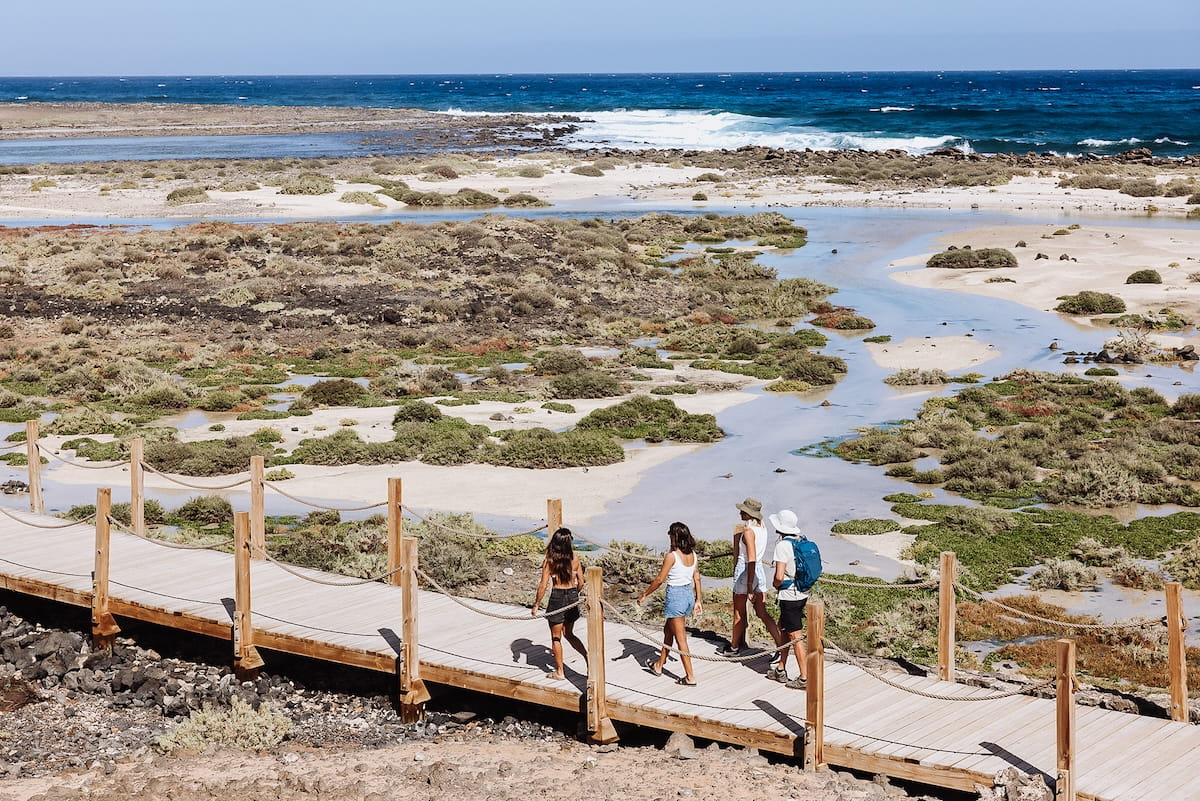
El Martiño Lighthouse and the landscape of Isla de Lobos They thus form part of the first stage of her life. Josefina spent her early years among the islands before the family continued their journey through different places on the Peninsula.
Her stay in the Canary Islands was brief, but the distance did not erase her origins. Over the years, Lobos would reappear transformed by memory. The writer herself even referred to her native island as a “wart in the sea of the epic”, an image far removed from the tourist description and much closer to the intimate relationship he maintained with that remote territory.
The ocean, insularity, and nostalgia for a lost landscape can later be traced in his poetry. Lobos was not only the place where he was born: it became a part of the memory from which he constructed his identity.
The presence of lighthouse keepers, fishermen, and families like theirs is part of a little-known period in the islet's history. You can learn more about this context in our article on the History and life on Lobos Island.
A childhood marked by books
Her father's work led the family to live in different parts of Spain. Josefina thus grew up among different landscapes and cities, but also in a family environment where reading played an important role.
Her father was an avid reader, and Josefina began writing as a young girl. Her first poems were published when she was around fourteen, foreshadowing a literary career that would extend throughout much of the twentieth century.
Poetry, narrative, theater, essay, criticism, historical research, and journalism would all eventually form part of a body of work difficult to confine to a single discipline. Literature would be one of his major avenues of expression, but not the only one.
From Spain to Paraguay
During his youth he met the Paraguayan artist Andrés Campos Cervera, known as Julián de la Herrería, painter and ceramist who was in Spain deepening his knowledge of ceramic techniques.
The couple married, and in 1927 Josefina traveled to Paraguay. From that moment on, the South American country would become the center of her personal and professional life.
His arrival coincided with the beginning of a particularly intense period of cultural activity. Plá collaborated with newspapers and magazines, wrote plays, developed his poetic work, and actively participated in movements that sought to renew Paraguayan arts and literature.
In 1934 he published The price of dreams, his first book of poems, an early work within a literary production that would continue to grow for decades.
Much more than a writer: Josefina Plá and ceramics
Josefina Plá's literary side has traditionally occupied a large part of her biography, but her work in the plastic arts and, especially, in ceramics is fundamental to understanding her.
Her relationship with this art began alongside Julián de la Herrería. They shared research, techniques, and cultural references, creating an artistic bond that went far beyond their marital relationship.
Recent research has shed more light on Plá's role in this collaborative work. She was not merely the ceramist's partner: she contributed to the thematic conception of various pieces and shared her knowledge of pre-Columbian imagery, myths, and cultures, which were later reflected in the works.
A new perspective from the DONA(N) exhibition
This dimension of his career regained prominence in 2025 with the exhibition “DONA(N). The role of women in museum collections”, organized by the National Museum of Ceramics and Decorative Arts “González Martí”.
The exhibition brought back the figure of Josefina Plá not only as an artist, but also as a fundamental woman for the conservation and transmission of the artistic legacy of Julián de la Herrería.
After her husband's death in 1937, Plá worked for years to transfer and preserve part of his ceramic production in Paraguay. Finally, in 1956, she managed to organize the shipment of the works and donated several pieces by Campos Cervera to the National Ceramics Museum.
The exhibition displayed three of these works alongside a fourth piece directly linked to Josefina's own career as a ceramist. This last piece reveals a facet of her work that was long overshadowed by her extensive literary output.
Between 1956 and 1957, Josefina also returned to Manises to continue deepening her study of ceramics alongside the Paraguayan artist José Laterza Parodi, with whom she had participated in the creation of the Arte Nuevo group.
A key figure in Paraguayan culture
Over the decades, Josefina Plá became one of the leading figures in Paraguay's cultural renewal. Her work spanned virtually every discipline in which she participated.
In literature, she cultivated poetry, short stories, theater, and essays. As a researcher, she studied Paraguayan cultural history. As a journalist, she wrote for numerous publications, and within the visual arts, she participated in movements that contributed to modernizing the country's artistic landscape.
He also carried out extensive teaching and cultural work, participating in initiatives such as the Arte Nuevo group and contributing to the training of later generations of artists and writers.
A significant portion of her work also addressed Paraguayan social realities, and especially the situation of women. For this reason, she is now considered one of the pioneering figures of feminism in Paraguay.
The poetry of Josefina Plá
Poetry occupies a central place in his work. After The price of dreamsPublished in 1934, numerous poetry collections and compilations would follow, such as The root and the dawn, Faces in the water, Invention of death, The dust in love, Naked day, Foliage of time o The flame and the sand.
Her writing evolved over the years, but it maintained a strong intimate and reflective dimension. Memory, the passage of time, loss, identity, and the human condition appear recurrently.
Within that universe, the sea also remains. The distance from the Canary Islands transformed the island landscape into a territory reconstructed from memories, a presence that acquires special strength precisely because Josefina never developed her adult life in the land where she was born.
Recognition of an exceptional career
Josefina Plá's influence was recognized both within and outside of Paraguay. She was a member of the Paraguayan Academy of the Spanish Language and the Paraguayan Academy of History, and received numerous awards throughout her career.
Among them are the United States Bicentennial Medal In 1976, his appointment as Lady of the Order of Isabella the Catholic In 1977, the title of Honorary Doctorate from the National University of Asunción in 1981, the Mottart Prize for Literature from the French Academy in 1987 and the Gold Medal for Merit in Fine Arts of Spain in 1995.
His importance did not disappear with his death. The recovery and study of his work continues to expand, both in Paraguay and in Spain and the Canary Islands.
From Lobos to the heart of America
Josefina Plá died in Asunción on January 11, 1999, after having developed for decades one of the most unique cultural trajectories between Spain and Paraguay.
His relationship with Fuerteventura is particularly striking precisely because of the distance. He lived there alone during his early years, but that landscape became ingrained in his memory and eventually became part of the later interpretation of his work.
Fuerteventura has also gradually recovered his legacy. The Island Council has published and disseminated some of his literary works, several cultural spaces now bear his name, and on Isla de Lobos his memory remains linked to the place where his story began.
In 2026, his work regained prominence in the Canary Islands with its inclusion in the Basic Canary Islands Librarythrough a volume that brings together a selection of his short stories accompanied by a critical study. It is another example of how his legacy continues to be revisited and rediscovered decades after his death.
The Muse of Wolves
It is difficult to summarize Josefina Plá solely as a poet, writer, or artist. Her career spanned countries, disciplines, and very different cultural movements, from literature and journalism to theater, research, and ceramics.
But at the beginning of that story, the same place always appears: a small volcanic island opposite Fuerteventura, the job of a lighthouse keeper father, and a landscape surrounded by the Atlantic.
Josefina Plá made Paraguay her home and one of the major territories of her work, but that initial connection with Lobos never ceased. More than a century after her birth, her figure continues to unite two shores: the island where his life began and the country where he built a good part of his cultural legacy.