Why is it called Isla de Lobos (Island of Wolves)? The origin of the name and the history of the sea lions.
Anyone visiting Isla de Lobos for the first time might ask a rather logical question: where does its name come from if there are no wolves on the island?
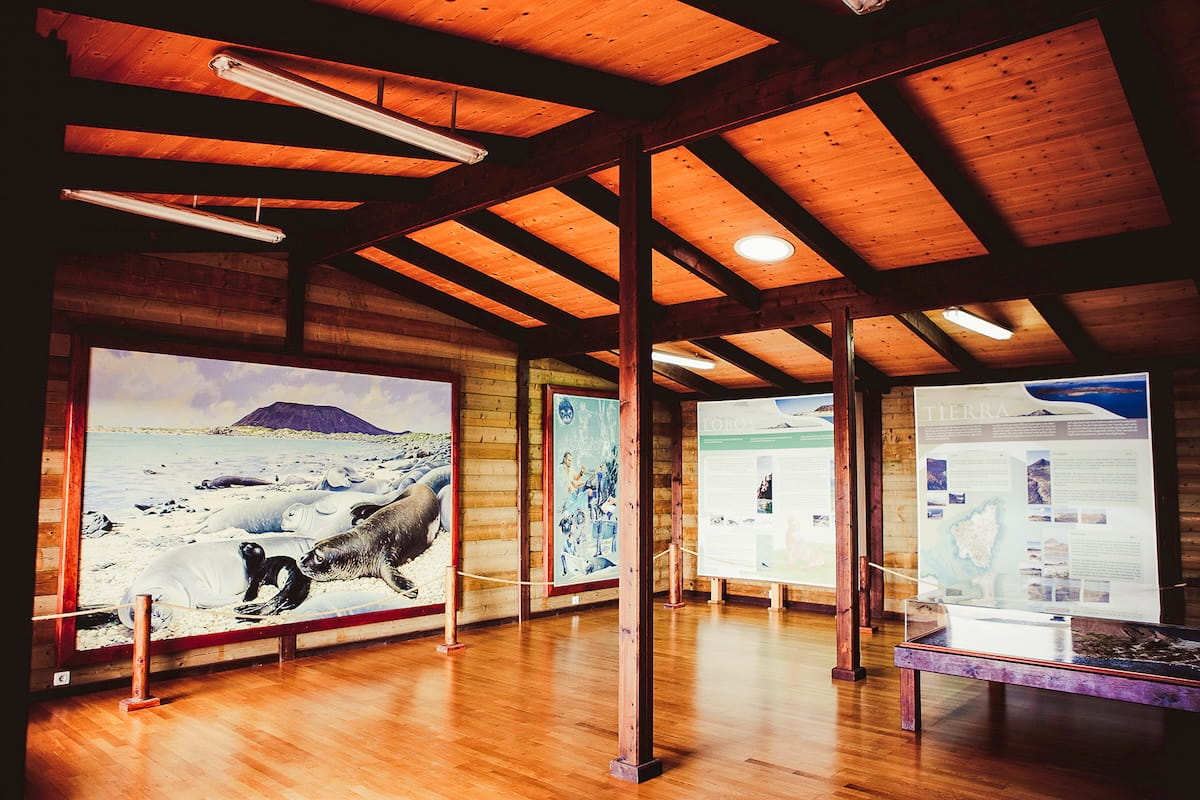
The answer has nothing to do with land wolves, but with an animal that once inhabited these coasts: the Mediterranean monk seal (Monachus monachus), historically known in the Canary Islands as the sea wolf.
The presence of these animals was so significant that it ended up giving its name to the small islet located off Corralejo. Today, monk seals no longer form a stable population in the Canary Islands, but their memory remains in one of Fuerteventura's best-known place names.
The true origin of the name Isla de Lobos
For centuries, the Canary Island coasts were part of the distribution area of the monk sealOn Isla de Lobos these animals found a suitable environment to rest and take refuge, and different historical sources attest to their abundance.
That is why, when people used to talk about the "wolves" of the island, they were referring to these marine mammals and not to the land animal that we immediately associate with that word today.
The name has survived for centuries, even after the disappearance of the archipelago's seal colonies.
A name that appears on old maps
The relationship between the islet and the sea lions goes back much further than it might seem. References to the territory linked to the presence of these animals already appear in medieval maps from the 14th century.
One such instance is found in Angelino Dulcert's 1339 map, where the future islet of Lobos is identified by a name related to the monk seal. This demonstrates that the presence of these animals was already a well-known feature, sufficient to be reflected on maps of the time.
The sea lions that inhabited the island
The Mediterranean monk seal is one of the most characteristic pinnipeds of the Mediterranean and the eastern Atlantic. Historically, it was also present in the Canary Islands, where several places retained names related to these animals.
Isla de Lobos is probably the most recognizable example.
These mammals used calm coastal areas to rest and reproduce. Their presence on the islet was numerous enough to attract the attention of sailors and expeditions exploring the archipelago.
The first chronicles about sea lions
At the beginning of the 15th century, chronicles of the European conquest of the Canary Islands already described a large presence of sea lions on the islet. The animals also had significant economic value at that time, mainly due to the use of their fur and blubber.
The exploitation was intense. Historical sources speak of numerous catches and a rapid decline in the populations that inhabited these coasts.
Over time, the Mediterranean monk seal disappeared from the archipelago as a stable population. The name Isla de Lobos thus remains as a testament to a fauna that formed part of the Canary Islands' natural landscape for centuries.
A story marked by the relationship between people and the sea
The story of Isla de Lobos doesn't end with the monk seals. For centuries, the islet has maintained a close relationship with the sea and with the people who used its resources or lived there temporarily.
Fishermen, sailors, lighthouse keepers, and small communities left their mark on various parts of the island. Even today, remnants of this human presence can be found, helping us understand what life was like in this isolated territory, shaped by the ocean.
If you want to delve deeper into this part of the islet's past, you can learn more about the History and life on Lobos Island, from the old fishermen to those who were linked to the Martiño Lighthouse.
Are there currently sea lions on Isla de Lobos?
No. Although they were the animals that gave the island its name, there is currently no stable population of monk seals on Isla de Lobos.
The species suffered for centuries from hunting pressure and the transformation of many of its usual resting and breeding grounds. Its disappearance from the Canary Islands is part of a story that helps us understand why the conservation of natural spaces and the species that inhabit them is so important.
The name remains, even though its former inhabitants have disappeared.
The name of Isla de Lobos holds a part of its past. Every time we speak of the islet, we are referring, even if we are often unaware of it, to the monk seals that once inhabited these shores.
This origin makes the toponym more than just a curiosity: it is also a small fragment of the natural history of the Canary Islands and of the relationship that existed for centuries between people and the resources of the sea.
Today the islet is home to other species adapted to its particular conditions. To learn more about them, you can consult our article on the Biodiversity on Lobos Island, where we explain the flora and fauna that are currently part of this protected area.
To offer the best experiences, we use technologies such as cookies to store and / or access device information. The consent of these technologies will allow us to process data such as surfing behavior or unique identifications on this site. Not consenting or withdrawing consent may adversely affect certain features and functions.
Functional
Always active
The storage or technical access is strictly necessary for the legitimate purpose of allowing the use of a specific service explicitly requested by the subscriber or user, or for the sole purpose of carrying out the transmission of a communication through an electronic communications network. .
Preferences
Storage or technical access is necessary for the legitimate purpose of storing preferences not requested by the subscriber or user.
Global Data
The storage or technical access that is used exclusively for statistical purposes.Storage or technical access that is used exclusively for anonymous statistical purposes. Without a request, voluntary compliance by your Internet service provider, or additional logging by a third party, information stored or retrieved solely for this purpose cannot be used to identify you.
Marketing
Storage or technical access is necessary to create user profiles to deliver advertising, or to track the user across one or multiple websites for similar marketing purposes.

 Anyone visiting Isla de Lobos for the first time might ask a rather logical question: where does its name come from if there are no wolves on the island?